Sunday, January 31, 2016

Accessibility and usability of online videos in MOOC context

The MOOC case book

Accessibility (ease of access) and usability (ease of use) of online videos are meaningful needs to be addressed, especially in the MOOCs context.

Scientific literature is full of information and best practices about users optimal engagement time, the notions of subtitles and transcripts and their usability under standard situations, whether with disabilities or not.

We have to keep in mind that accessibility and usability complement each other: by meeting the needs of specific users who can represent only a fraction of our visitors, we help all the others.

For instance, when we provide high-quality subtitles for people with hearing impairment, it is also useful for people watching the video in a noisy environment, like in a subway, or in places where noise level has to be minimal, as in an office or at the library.

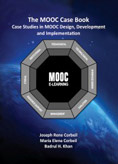
The chapter I have published in “The MOOC case book: Case Studies in MOOC Design, Development and Implementation” entitled “Towards an Engaging and Usable Video Content: Addressing Accessibility and Usability Issues During Video Development” deals with these issues in the MOOCs context, and is also useful whenever a video content is provided.

After a case studies of five MOOCs proposed on three different platforms, I talk about the state of the art of research in the relevant fields.
The MOOC case book

The MOOC case book
under the direction of Drs. Joseph Rene Corbeil, Maria Elena Corbeil and Badrul H. Khan
Linus publications (2015)
ISBN: 978-1-60797-561-8

Sunday, December 6, 2015

Introduction to Google’s Accelerated Mobile Pages (AMP)

Petra, Jordan

Google’s Accelerated Mobile Pages initiative is getting a lot of exposure since its launch in early October. Let’s see what it is, how it works, and how you can publish your own AMP HTML pages.

In this age of speed, a page that takes more than a few seconds to load is losing its appeal, and this is especially important on mobile phones. The AMP project serves to mitigate this problem. The articles published in this format will be highlighted by Google in its search results from the beginning of next year.

Would you like to know more about it? I invite you to read the full version of this article I have published on SitePoint’s website: Introduction to Google’s Accelerated Mobile Pages.

Saturday, October 3, 2015

Why Japanese is such a fun language to learn

Cherry tree flowers

Let me share with you a few fun facts about Japanese language after a 30-hour intensive Japanese summer class.

Sunday, February 8, 2015

Human-Computer Interaction (MOOC)

Human-Computer Interaction (MOOC)

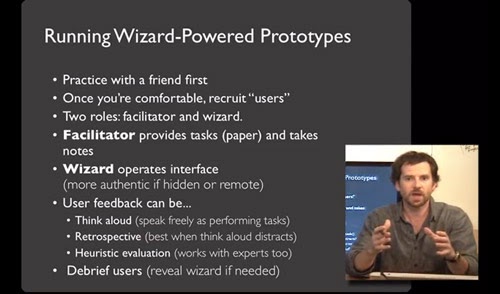
Hosted by Coursera, this Human-Computer Interaction course from the University of California in San Diego is presented by Scott Klemmer, Associate Professor of Cognitive Science and Computer Science and Engineering. It presents the concepts of prototyping, comparative evaluation, the principles of visual design, of perception and cognition. To sum it up, it helps building human-centered design skills.

Saturday, January 24, 2015

Foreign language MOOCs: kill two birds with one stone

Japanese Power Pop MOOC

If you are interested in languages and continuing education, why not kill two birds with one stone?
Many online courses are offered around the world in a very wide variety of areas and many languages. Even though English still predominates, you can practice many foreign languages and get used to many accents, improve your understanding and expand your vocabulary while learning specific knowledges.
Here is a selection of a few courses to make you learn and travel.

Tuesday, November 11, 2014

Introduction to Neuroeconomics (MOOC)

Introduction to Neuroeconomics (MOOC)

With the full title Introduction to Neuroeconomics: how the brain makes decisions, this course available on the Coursera platform is at the convergence of economics, psychology, and neuroscience. It is presented by Vasily Klucharev from the Higher School of Economics of Moscow (Russia).

Saturday, August 30, 2014

Data journalism (MOOC)

Data journalism (MOOC)

Available on the Canvas platform, this course is titled Doing journalism with data: first steps, skills and tools and is part of the European Journalism Center initiative. It is aimed at providing concepts, techniques and skills to effectively work with data and produce compelling data stories.

Sunday, August 17, 2014

Faster YouTube Embeds with JavaScript

Faster YouTube Embeds with JavaScript

We want our visitors to get our content as fast as possible, which means as light as we can, and with the minimum number of requests. But we want to keep them on our pages, and be entertained. This is where embedding videos enters the scene.

Videos illustrate our textual content, bring life to it, and are often served by a third party. What more to ask? Well, there’s a hidden price tag: they are slow and heavy to download, even when the visitor is not watching them.

One simple video on a page called through an innocuous iframe can add up to 6 HTTP requests and as much as 450kb of content. The solution I’m proposing can reduce those numbers to 1 request and about 50kb per video, along with a few bytes of JavaScript.

If you want to know more, I invite you to read the full article on Sitepoint.

Photo credit: Mirror of Ashes

Accélérez vos pages contenant des vidéos YouTube (full article in French)
Acelere sus páginas con vídeos de YouTube (full article in Spanish)
Acelere suas páginas com vídeos YouTube (full article in Portuguese)

Sunday, July 6, 2014

Online Marketing Strategies - Community Manager (MOOC)

Online Marketing Strategies - Community Manager (MOOC)

Titled Online Marketing Strategies. Community Manager, this course is offered in Spanish. It is structured in four modules dedicated to the community managers: online strategies, blogs and microblogs, social networks and community manager, and online advertising.

Saturday, June 21, 2014

Web Content Accessibility Guidelines WCAG 2.0 (MOOC)

Web Content Accessibility Guidelines WCAG 2.0 (MOOC)

Offered in Portuguese by the Polytechnic Institute of Leiria, Portugal, via its Up2U platform, this course entitled Knowing the Web Content Accessibility Guidelines WCAG 2.0 presents the Web Content Accessibility Guidelines in context. Its authors are Manuela Francisco, instructional designer at the Polytechnic Institute, and Norberto Sousa, accessibility and websites validation consultant.

Sunday, March 30, 2014

Semantic Web Technologies (MOOC)

Semantic Web Technologies (MOOC)

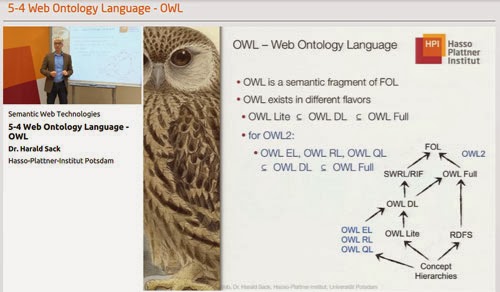
This course presents the fundamentals of Semantic Web technologies, i.e. how to represent knowledge and how to access and benefit from semantic data on the Web. It is lectured in English by Dr. Harald Sack, a senior researcher at the Hasso Plattner Institute of Potsdam, and is available on the openHPI platform.

Sunday, February 9, 2014

Web User Experience (MOOC)


This Web User Experience course is a MOOC offered by the open2study.com website. It is lectured by Amir Ansari, and is part of the Internet Communications Bachelor of Arts.

Sunday, January 5, 2014

Responsive Web Design: some paths to follow


Responsive web design is an area with constant novelties and avenues for reflection, often accompanied by concrete examples of code to demonstrate their relevance. Today, we will focus on the problem of tabs, on readability and the length of lines, on the different uses of the devices and their screen size, before glimpsing on what the future has for us.

Monday, December 2, 2013

Responsive tables


Tabular data is an often used layout component that imposes some tricky decisions in a responsive environment. If the table is wider than the viewport, we can enable horizontal scrolling, hide some columns, show a sum up of the table with a link to the full version of it, or we can make other decisions as well.

Monday, November 11, 2013

Online Advertising (MOOC)


The Online Advertising course I will talk about is a MOOC offered by the open2study.com website. Its lecturer is Patty Keegan, who knows her subject first-hand, and does a great job at introducing it while not being too technical.

Saturday, October 12, 2013

Principles of Project Management (MOOC)


MOOCs (which stands for Massive Open Online Courses) are offered by schools and universities from all over the world in as diverse fields as anthropology, mathematics, marketing, or information technologies. The course we are interested in is entitled Principles of Project Management. It is delivered by the Polytechnic of Western Australia, often shortened as Polytechnic West, a technical and further education institution based in Perth.

Sunday, September 22, 2013

It's time to relax


The relaxing sounds of nature have that great way of making us forget all the stress within a few minutes of listening. Here is a selection of sites offering you a deep relaxation.

Sunday, August 25, 2013

Social share buttons are useless


Social share buttons are about everywhere. Ubiquitous on the web, they invite you to like, share or plus the most insignificant page to help its content being seen by hundreds or, why not, even millions of potential visitors. But are they as necessary as they want to make believe?

Sunday, August 4, 2013

Windows 8 touch gesture translation


With the advent of touch screens and their matching interface documentations, it may be difficult to know how to translate the different gestures names (to tap, to swipe, to pinch…). Windows 8 offers us a translation for each action in its on-line documentation when we compare its different localizations.

Saturday, July 20, 2013

Some news on the RWD front


The responsive design world is constantly evolving, and with it the W3C recommendations and working drafts, in particular concerning the CSS standards evolution. Typography has its word too, and web font usage brings its share of solutions. This articles brings out a series of relevant links and articles to pursue a longstanding discussion.